Tokyo Through Time | A Private City Tour with MK
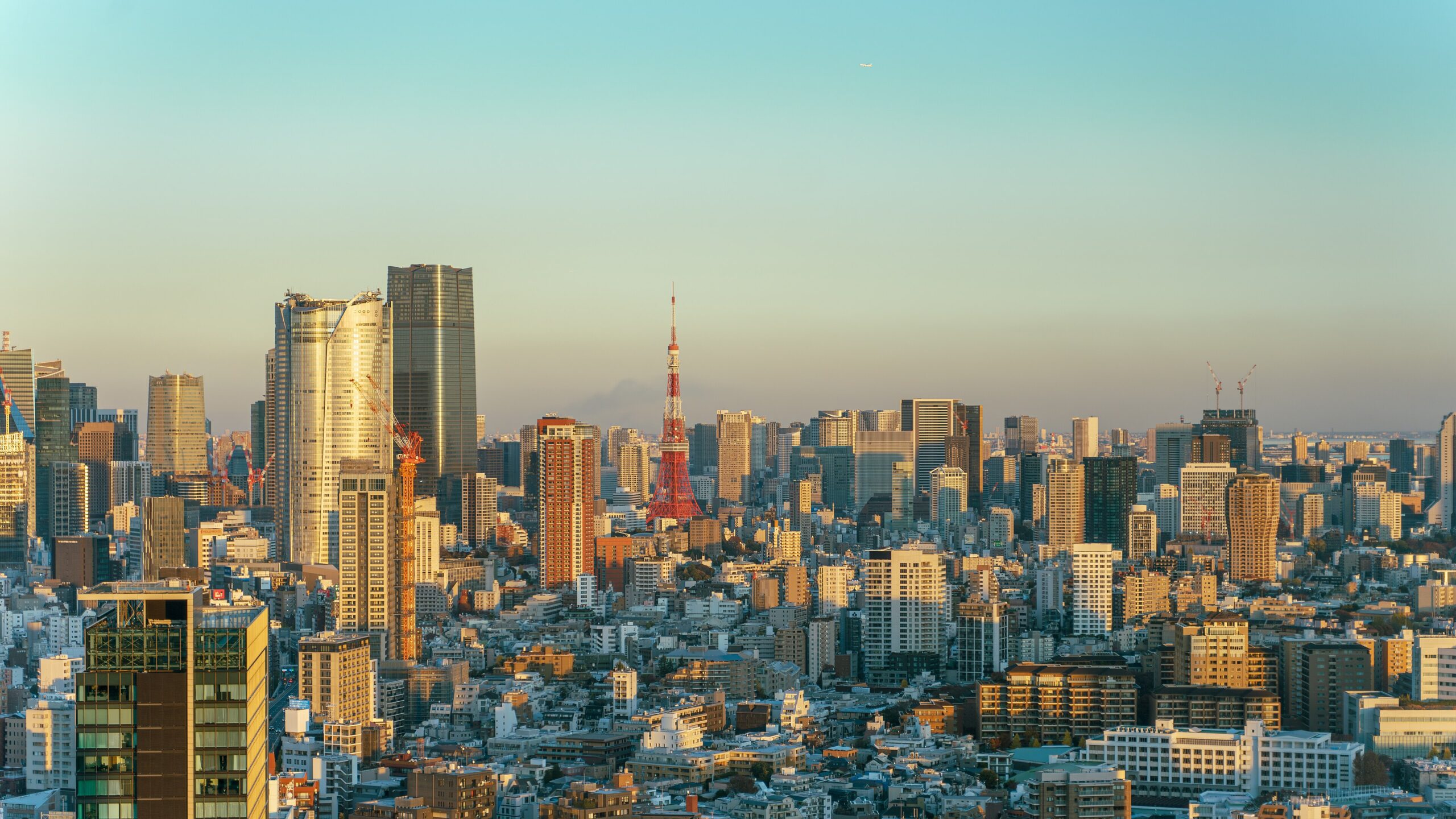
With only 24 hours in Tokyo, visiting the city’s most famous districts can be overwhelming. From the historic temple streets of Asakusa to the bright neon towers of Shinjuku, the capital spreads out across neighborhoods that each feel like their own city. Thanks to MK’s private charter service, travelers can experience Tokyo’s history, present, and future in one smooth ride—easily moving between landmarks while discovering hidden spots along the way.
Time is the one thing you can’t get back, and in a city as large as Tokyo, every hour counts. With MK’s private charter service, the stress of navigating the world’s biggest metropolis vanishes. English-speaking drivers also serve as knowledgeable local guides, helping you move effortlessly between districts and customizing the day to suit your interests.
With just a day in the capital, every choice counts. Luckily, from the back seat of the MK, decisions feel less like planning and more like exploration. Your driver offers suggestions as the city moves past the window—historic neighborhoods, hidden viewpoints, unexpected detours—each stop revealing another layer of Tokyo’s endlessly evolving character.
Stop #1: Sensō-ji Temple
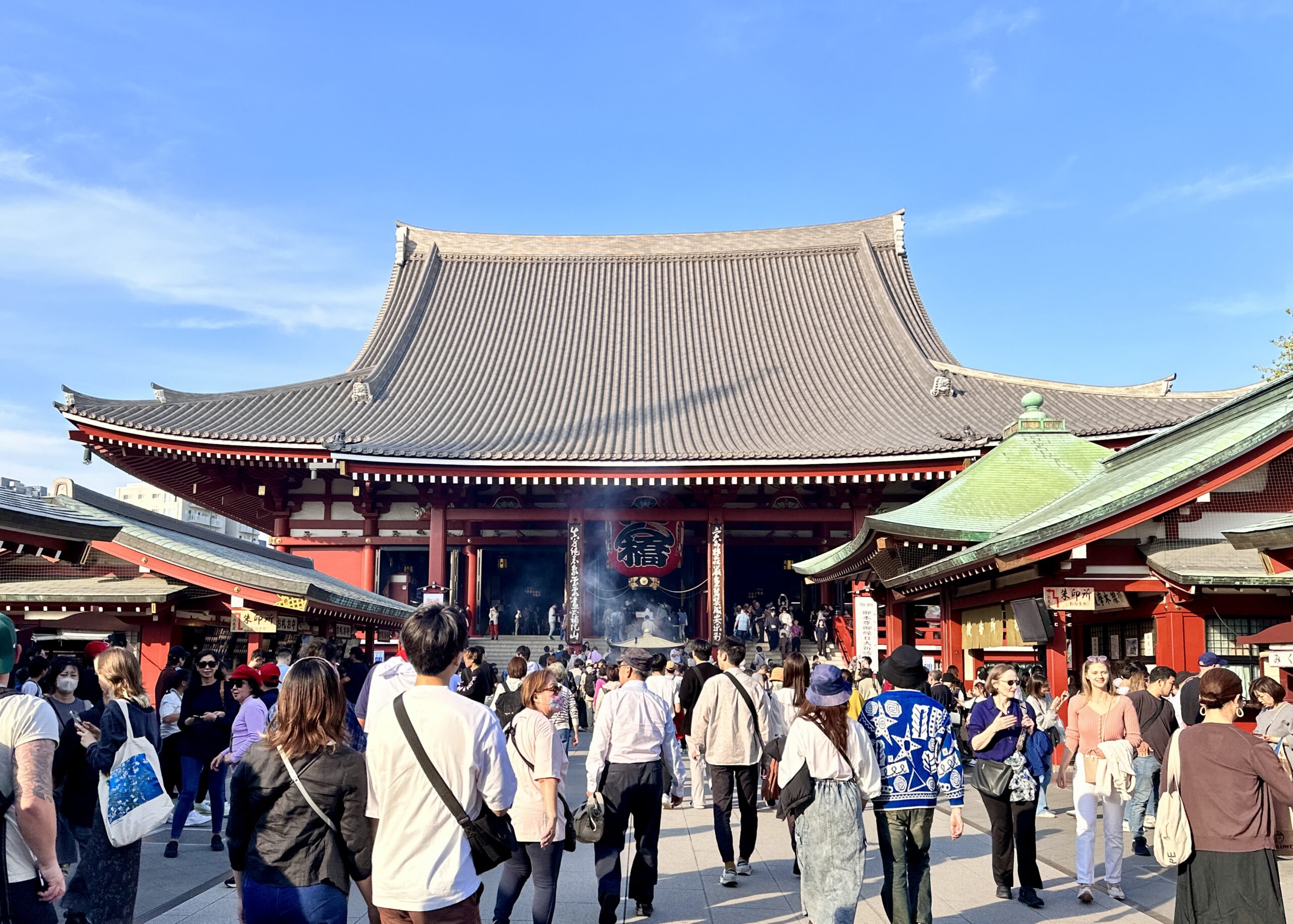
Morning starts in Asakusa, where the vibe feels worlds apart from the modern skyline across the river. Sensō-ji Temple, one of Tokyo’s oldest and most respected Buddhist temples, has stood here for over 1,400 years. Legend has it that the temple’s story began in 628 when two fishermen found a small statue in their nets along the Sumida River. When the village chief identified it as an image of Kannon, the Bodhisattva of Compassion, the villagers built a shrine to honor it.
Over time, the modest shrine grew into a formal temple complex. A monk named Shokai Shonin later built a hall to enshrine the statue, which became a hibutsu, or hidden image, still concealed within the temple’s main hall today. Structures like the famous Kaminarimon, the “Thunder Gate,” eventually became enduring symbols of Asakusa and Tokyo itself.
Today, visitors pass beneath the massive red lantern of Kaminarimon before strolling along Nakamise Street, where vendors sell traditional snacks and souvenirs. Incense smoke drifts across the courtyard as visitors purify themselves before offering prayers at the main hall. Standing here in the morning light, it feels as if Tokyo’s long history quietly breathes beneath the city’s modern rhythm.
Back in the MK, the driver gestures toward the skyline across the Sumida River.
“Before we head across town,” he suggests, “you may want to see Tokyo from above.”
A few minutes later, the skyline responds.
Stop #2: Tokyo Skytree
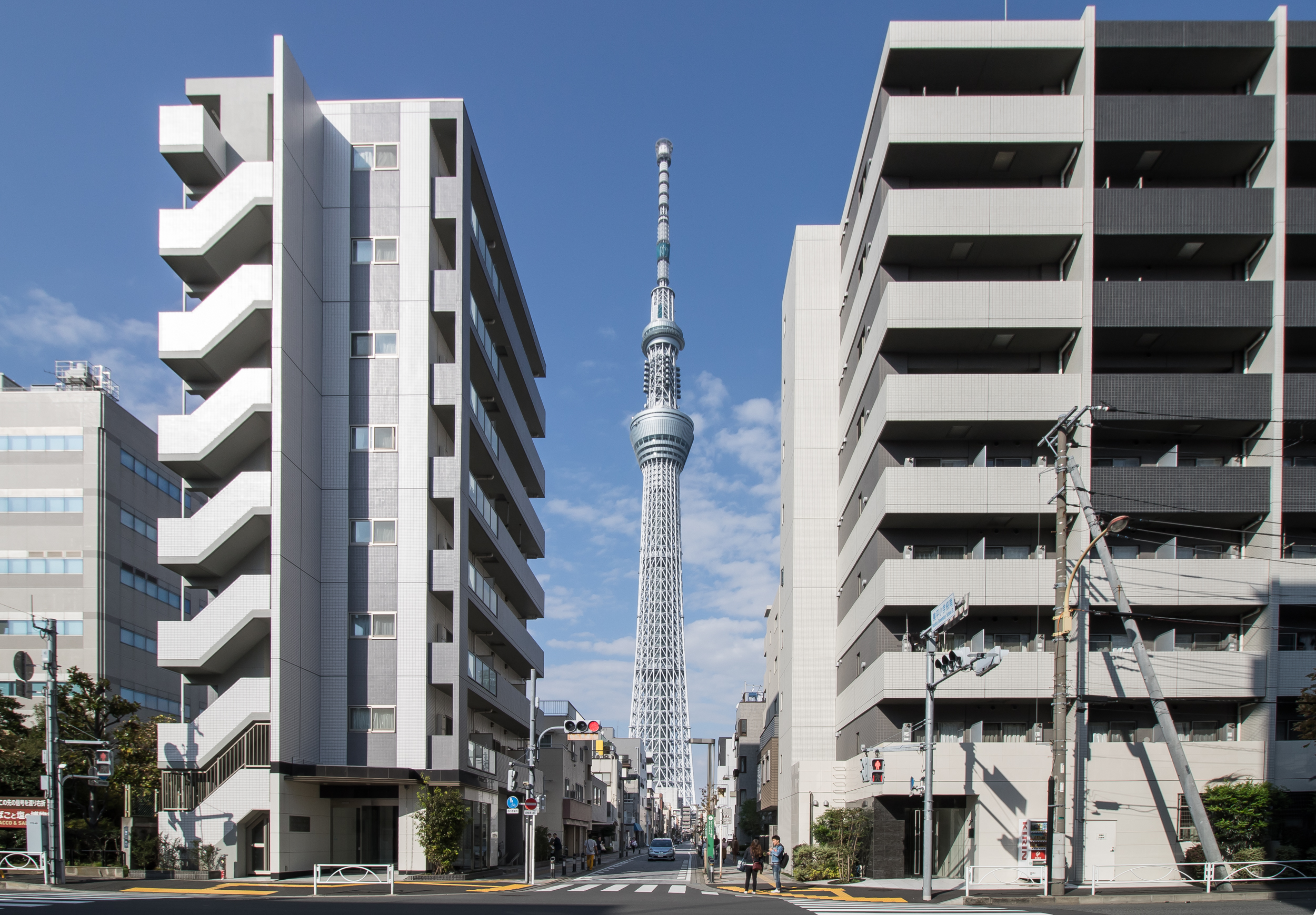
At 634 meters tall, Tokyo Skytree is not only Japan’s tallest structure but also the tallest tower in the world. Overlooking the eastern skyline, its sleek silhouette has become a defining landmark of modern Tokyo. While Tokyo Tower remains a cherished icon, Skytree embodies the city’s contemporary ambitions.
Originally conceived as a replacement for Tokyo Tower’s broadcast capabilities, the structure was designed by Pritzker Prize–winning architect Toyo Ito. Its form gently shifts from a triangular base to a circular tower as it ascends, inspired in part by traditional Japanese pagodas. The result combines advanced engineering with hints of historic architecture.
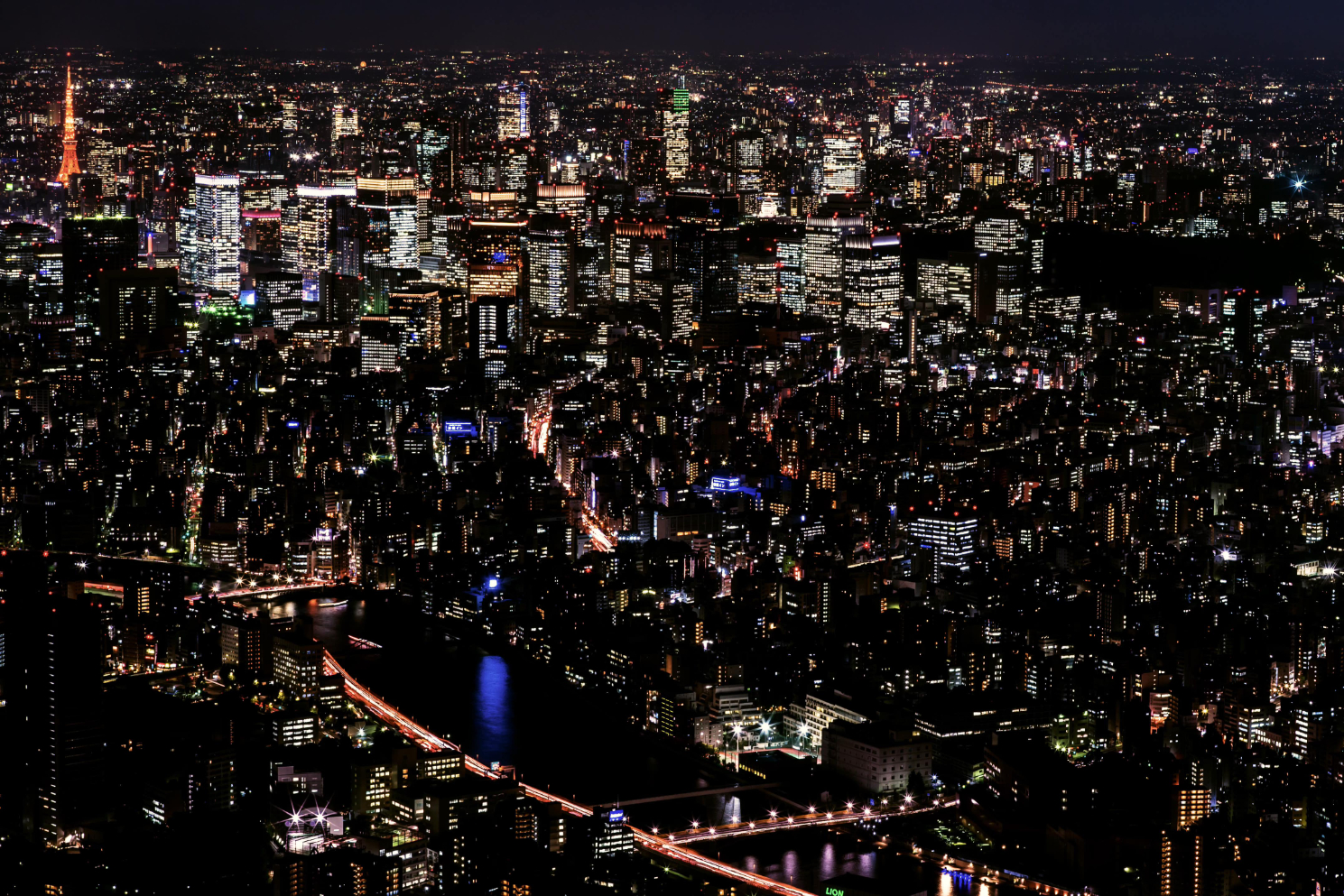
High-speed elevators take visitors up nearly 350 meters to the observation deck. From here, Tokyo extends endlessly in all directions, a vast array of buildings fading into the horizon. On especially clear days, Mount Fuji can be seen faintly in the distance. Below, the Solamachi complex at the tower’s base features cafés, restaurants, and hundreds of shops, making Skytree both a viewpoint and a lively city destination.
Back in the MK, traffic flows smoothly through the city.
“Tokyo has another side many visitors miss,” the driver notes as the car heads toward central Tokyo.
Soon, a palace appears between the trees.
Stop #3: Akasaka Palace
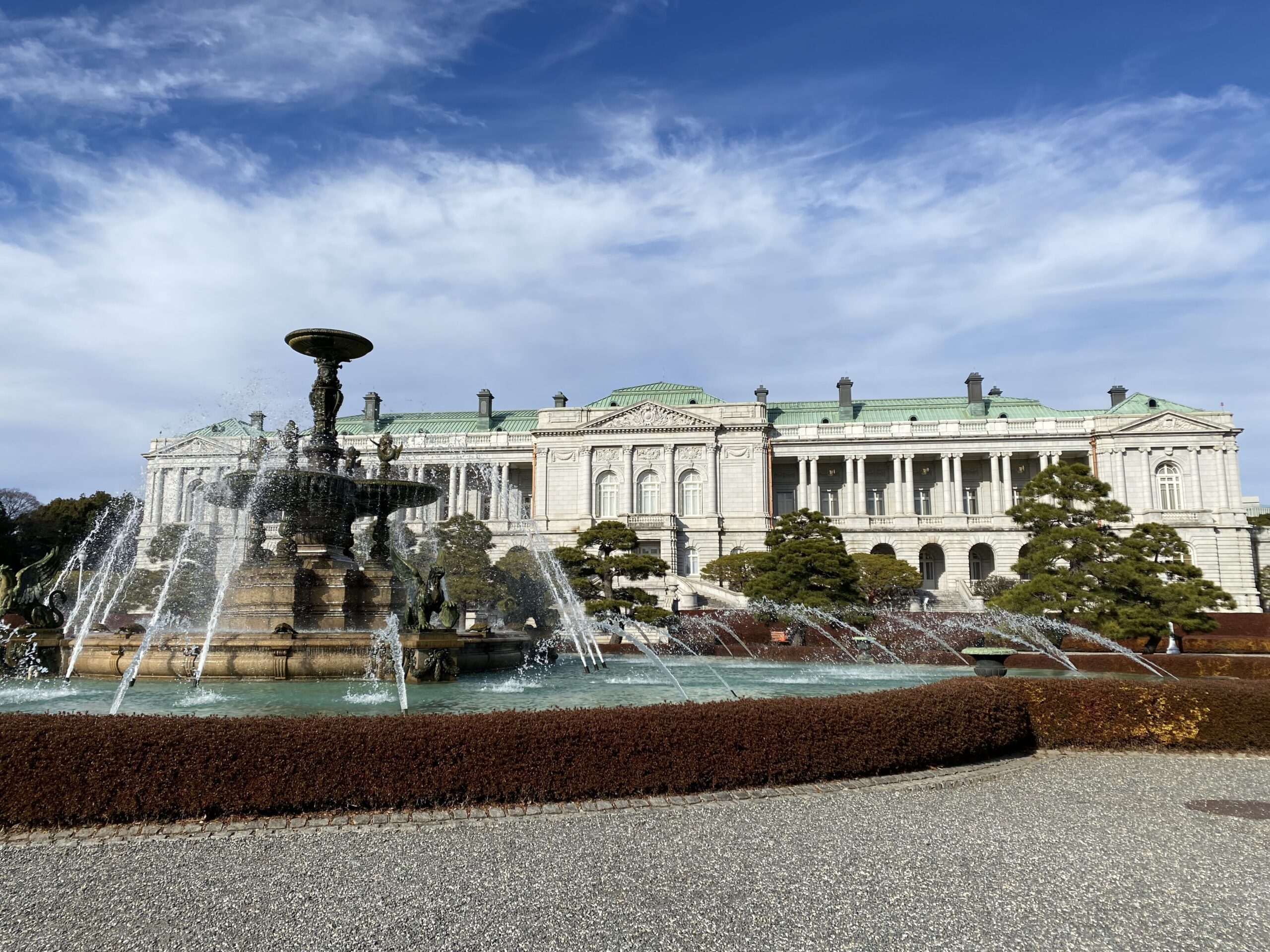
Akasaka Palace is among Tokyo’s most impressive landmarks. Situated in the quiet district of Moto-Akasaka, it is the only Neo-Baroque palace in Japan and one of the few places in the country where European royal architecture is displayed on such a grand scale. Built in 1909 as the residence of the Crown Prince, the building was later converted into Japan’s State Guest House.
The palace was designed by architect Katayama Tōkuma during the Meiji era, a time when Japan was swiftly opening up to global influence. Drawing inspiration from French Baroque architecture, its expansive wings, ornate façade, and decorative iron gates embody the elegance of European palaces from the late nineteenth century. After World War II, the building was transferred from the Imperial Household to the Japanese government and was eventually repurposed to host visiting world leaders.
Today, visitors can explore the palace and its elegant gardens. A bronze fountain sits at the center of the courtyard, framed by symmetrical landscaping that feels more like Versailles than central Tokyo. Inside, marble staircases, gilded ceilings, and richly decorated halls reveal the ceremonial spaces where diplomatic receptions and state banquets occur.
As the MK glides back onto the expressway, the driver glances in the mirror.
“Tokyo changes again after sunset,” he says.
“We should head west.”
Screens begin flickering to life.
Stop #4: Shibuya Crossing
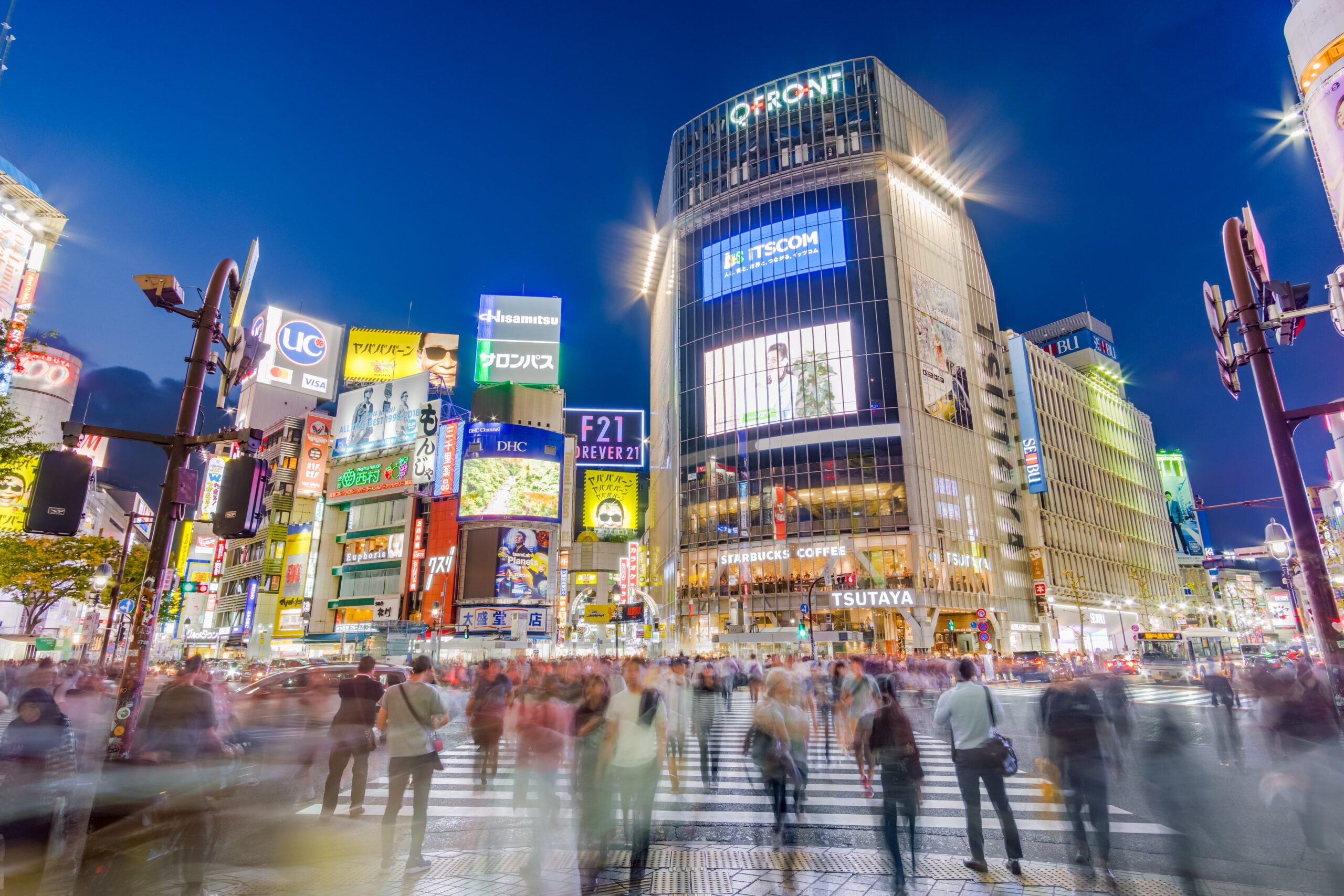
Skyscrapers surround the intersection, adorned with giant LED screens and flashing ads above the crowd. Restaurants, shops, and cafés line the nearby blocks, transforming the crossing into both a transit hub and a spectacle. From the second-floor windows of nearby cafés, the crossing appears like a carefully choreographed show.
Shibuya Crossing has appeared in countless movies, but experiencing it in person feels entirely different. When the signal turns green, the crowd rushes forward—order briefly forms from the dance of movement, timing, and sound before breaking apart again into the city.
When the scramble clears, the MK waits quietly nearby.
“Ready for the final stop?” the driver asks.
The car moves further into the night.
Stop #5: Shinjuku
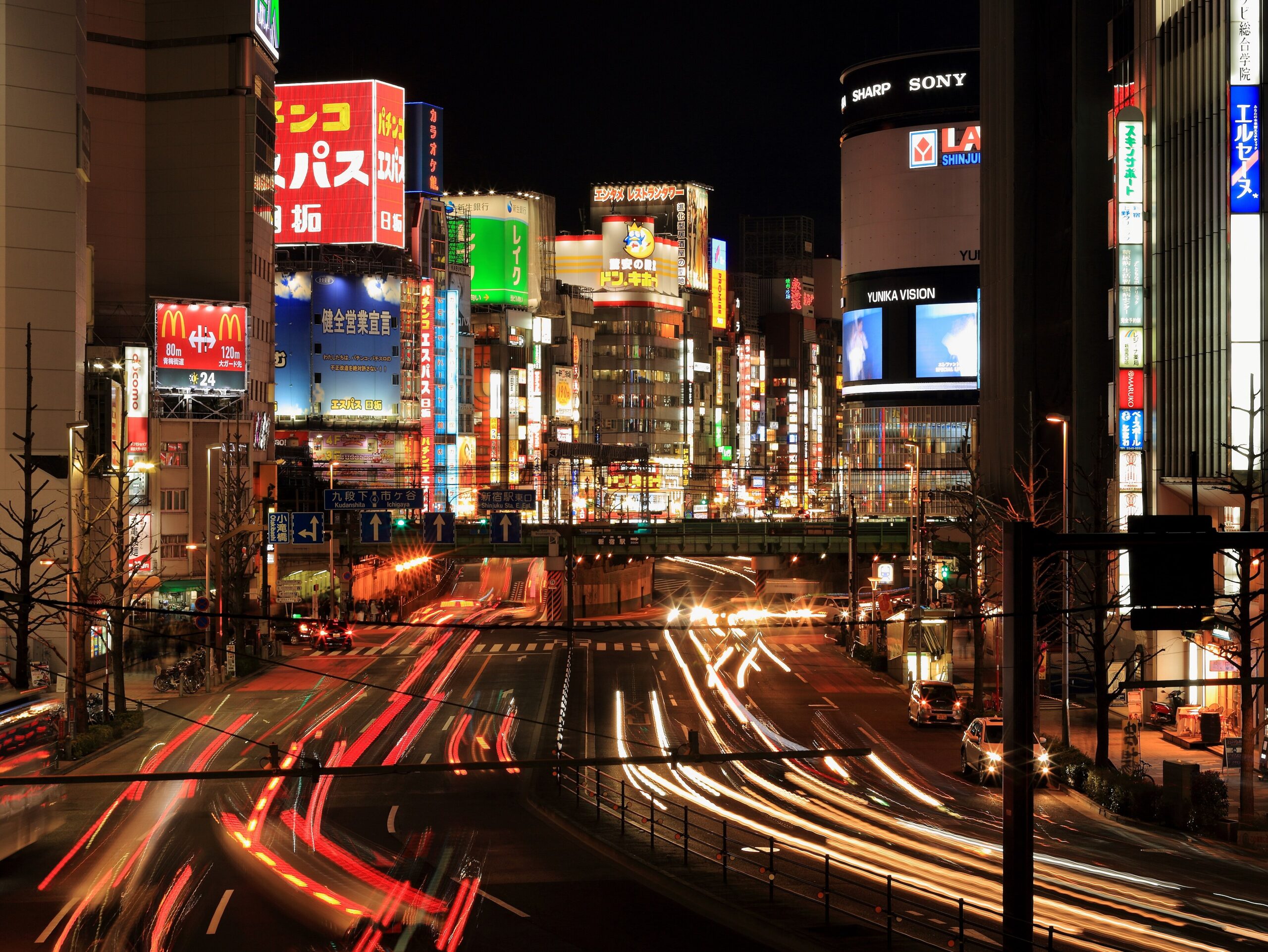
Shinjuku is the buzzing heart of Tokyo and home to the busiest train station in the world, where more than 3.6 million passengers pass through each day. Towering skyscrapers stand next to department stores, neon-lit streets, and endless restaurants and bars, creating one of the city’s most lively districts.
Beyond the station’s expansive maze lies a neighborhood full of striking contrasts. The Tokyo Metropolitan Government Building towers above the skyline like a futuristic cathedral, while nearby Kabukichō reveals Shinjuku’s more chaotic side. Golden Gai packs nightlife into a maze of tiny bars, each with its own character, while lantern-lit yokochō alleyways serve grilled skewers and highballs late into the night.
Yet, Shinjuku also offers unexpected tranquility. Just a few minutes away, Shinjuku Gyoen National Garden unfolds with expansive lawns, ponds, and seasonal flowers. Smaller districts like Arakichō and Yotsuya feature quiet streets lined with upscale restaurants and cozy bars. It is this contrast—spectacle alongside stillness—that makes Shinjuku feel less like a neighborhood and more like a city within a city.
***
By the time the MK starts the drive back, Tokyo lights up across the horizon. In a single day, you experience centuries of history—Edo temples, modern towers, imperial buildings, and neon-lit streets—all without changing trains. With MK, the city reveals itself not through strict schedules, but through endless possibilities. And in Tokyo, possibilities are everywhere.
Image credit
- David Kernan, CC BY 4.0, via Wikimedia Commons
- Akonnchiroll, CC0, via Wikimedia Commons
- Kakidai, CC BY-SA 4.0, via Wikimedia Commons
- Akonnchiroll, CC BY-SA 4.0, via Wikimedia Commons
- Benh LIEU SONG, via Wikimedia Commons
- Martin Falbisoner, CC BY-SA 3.0, via Wikimedia Commons
Let MK Guide Your Journey
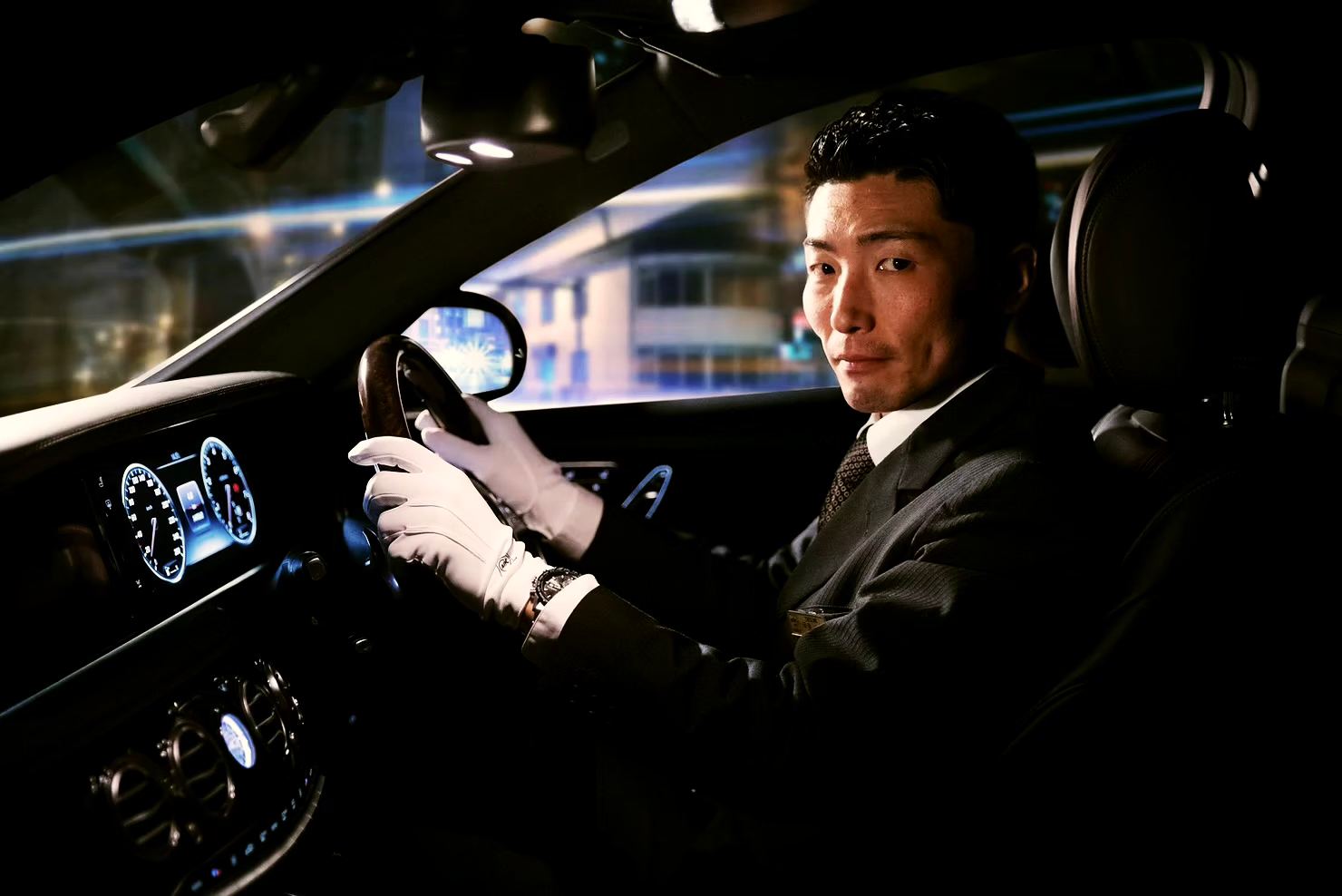
Time is the one thing you cannot reclaim, and MK ensures it is never wasted. Travel effortlessly with English-speaking drivers who are also knowledgeable local guides, arriving directly at temples, renowned restaurants, and cultural landmarks without the stress of schedules, stations, or luggage. With every detail arranged in advance and tours fully customizable to your interests and pace, MK transforms a single day into a seamless, elevated experience defined by comfort, precision, and access.
Plan your trip now with MK Guide.