Shinsekai — Osaka’s Retro Dreamscape Reborn
Once feared, now revered, Shinsekai (meaning “New World”) captures Osaka’s spirit in its rawest, most unapologetic form. This district was where day laborers sought escape, where locals warned each other to be cautious, especially after dark, and where neon allure combined with a mix of vice and joy. Today, that same chaotic energy has been transformed, not erased, into something electrifying. It’s a living museum of Osaka’s unpolished soul, where layers of nostalgia, spectacle, and reinvention converge.
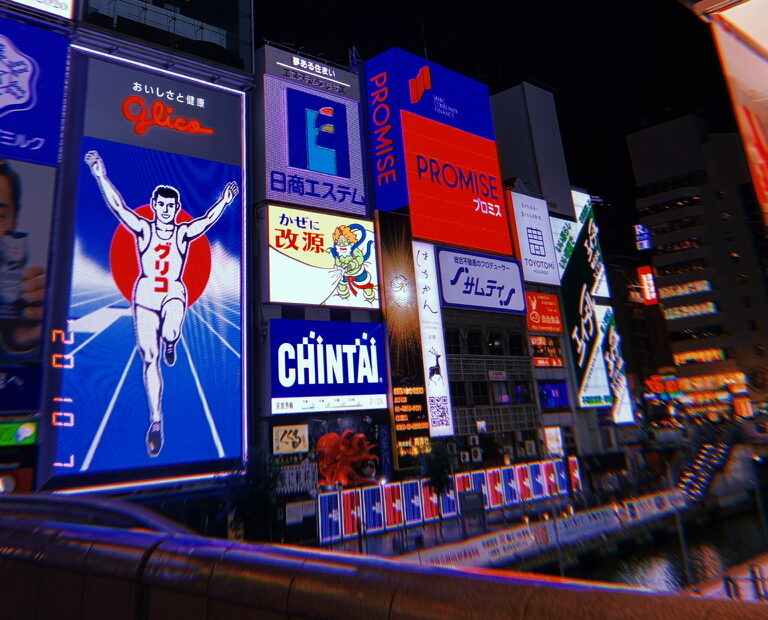
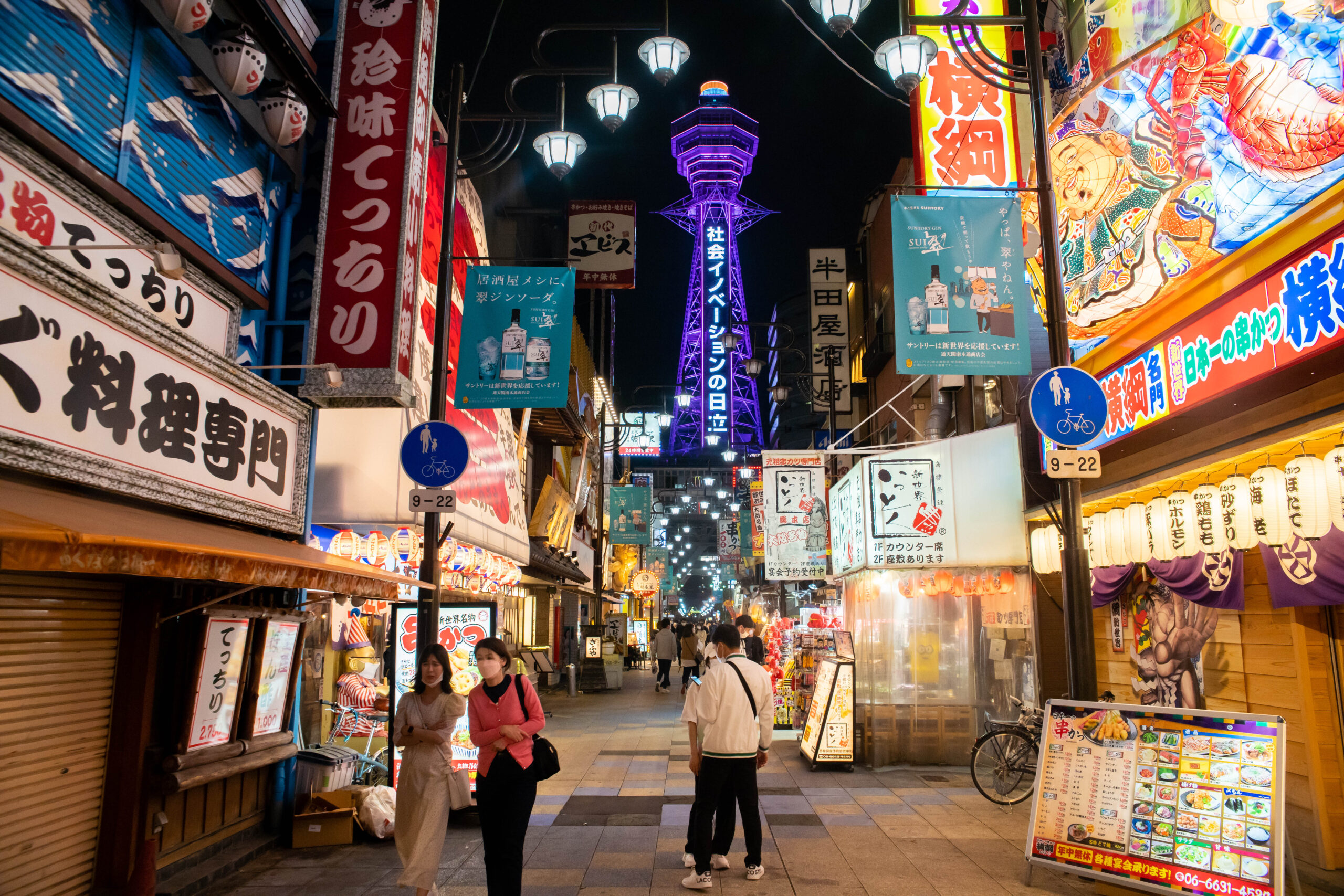
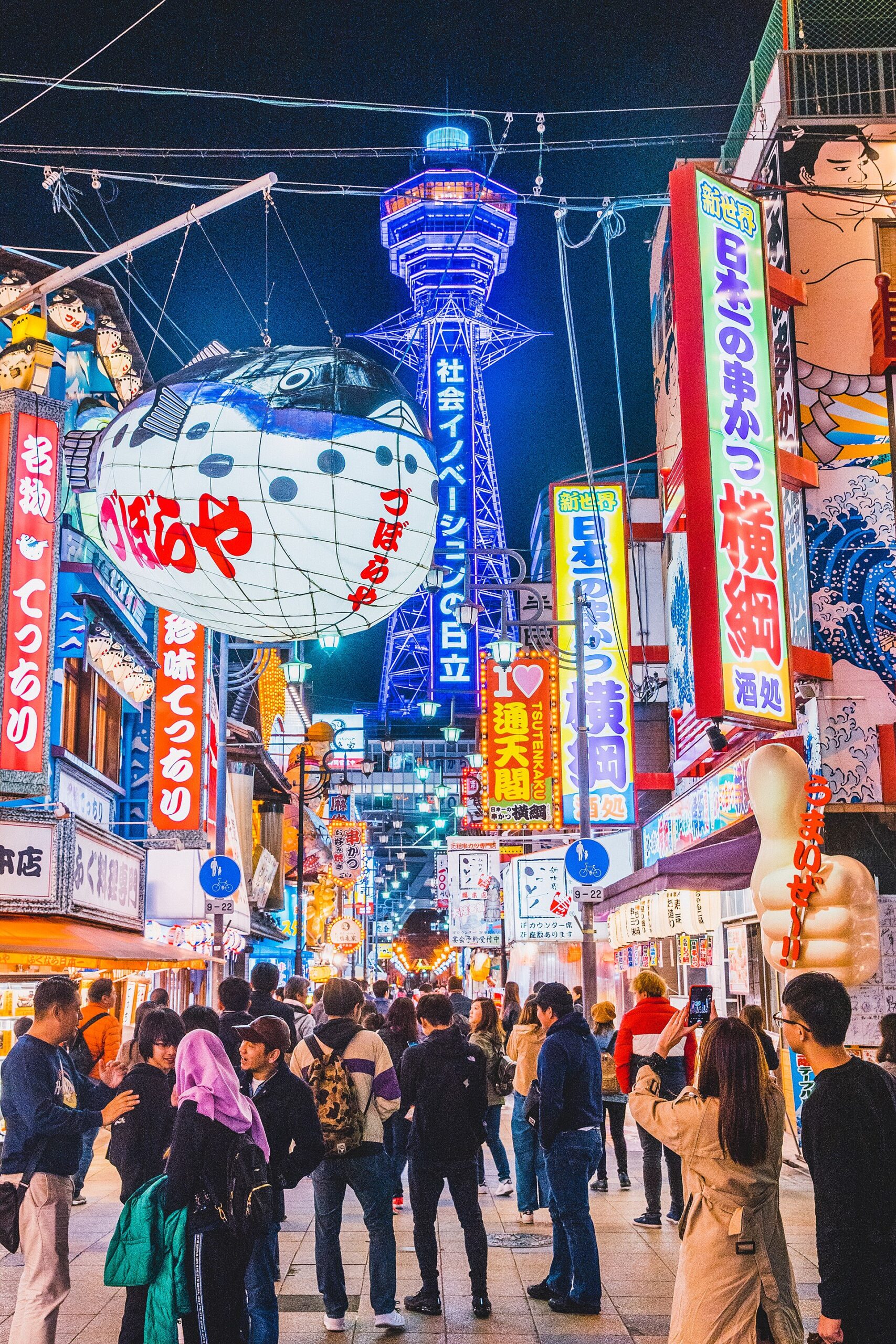 The pachinko parlors and adult theaters haven’t disappeared; they’ve faded to the periphery. In their place: kushikatsu. Golden skewers of battered everything, from pork to pumpkin, served in the boisterous clatter of street-side counters and smoky izakayas. Above it all looms Tsutenkaku Tower, not just a landmark but a symbol of the city. Forget the Glico Man; Tsutenkaku is the real heartbeat of Osaka. Lit up nightly, it watches over the district like a patron saint of gaudy survival.
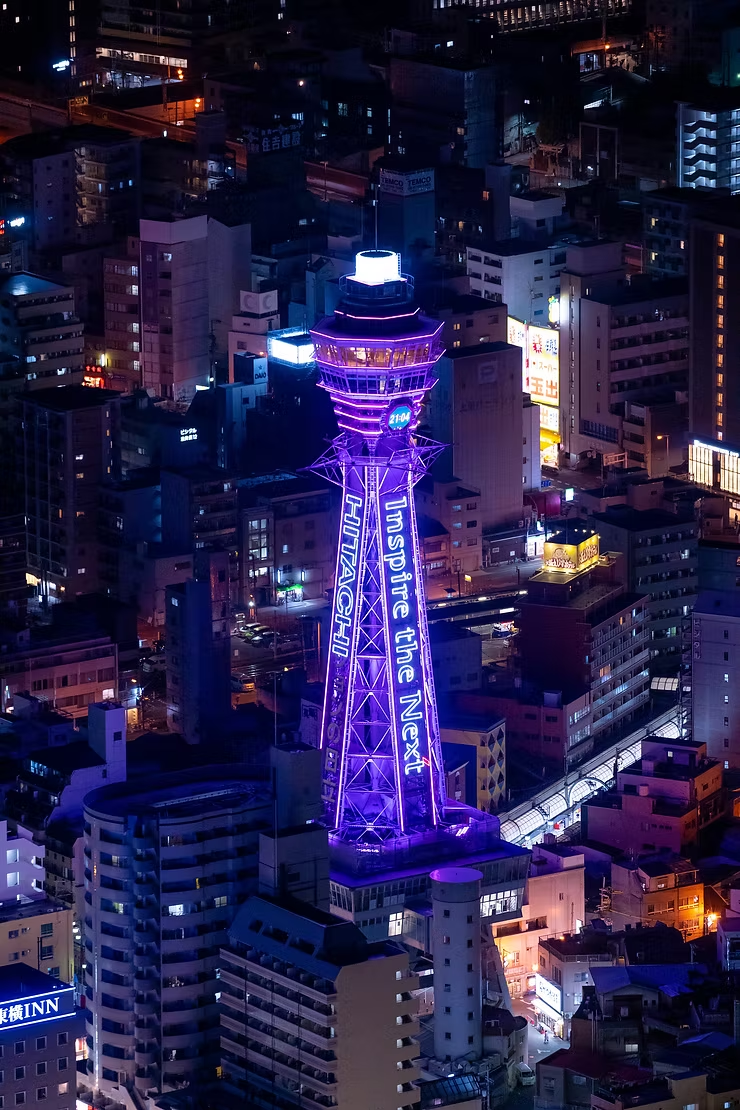
Shinsekai’s original blueprint was ambitious. In 1910, urban planners fused Coney Island’s amusement flair with the romantic cityscape of Paris, creating a cultural chimera built to impress. When the original tower burned down in 1943, its 300 tons of iron were donated to the war effort. The area sat scorched and stalled until 1956, when a rebuilt Tsutenkaku signaled postwar revival. That spirit reached its peak with the 1970 World Expo in Osaka, the city’s global coming-out party. But as the bubble burst in the ‘90s, Shinsekai was scapegoated. Moral decay and public disorder. This was Osaka’s Times Square. And like its New York counterpart, it didn’t stay down for long.
In the 2000s, a new generation rediscovered Shinsekai, not ironically but with reverence. Today, it thrives as Osaka’s nostalgic counter-world, where authenticity comes not from polish but from wear and tear.
Wander through Jan-Jan Yokocho, the 180-meter arcade where takoyaki sizzles, standing bars hum with Osaka-ben, and secondhand goods are haggled over by leopard-print obāsans. At the same time, Shoji players lean into their boards, unfazed by the chaos.
Drop a coin into Kasuga Amusement Park, my personal favorite, where the glow of CRT monitors lights up rounds of Street Fighter and bullet-hell shooters. Kasuga isn’t retro-themed; it’s the real thing, preserved in flickering screens and smoke-stained buttons.
Ride the elevator up to Tsutenkaku itself, “the tower leading to heaven,” for panoramic views and a brush with Billiken, the city’s offbeat mascot. Not a kami, not folklore, but an American dream-vision turned Osaka icon. Rub his feet for luck, if you believe in that sort of thing.
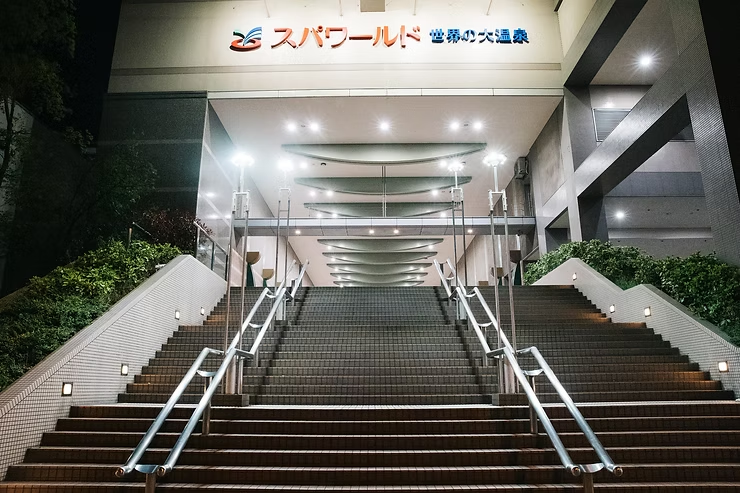
And then there’s Spa World, part onsen, part fantasy park. One half is modeled after Greco-Roman baths, the other after traditional Asian motifs. It rotates by gender. Complete immersion is recommended, while bare-bottom beers are optional.
Kids in tow? Tennoji Zoo still draws families. Or test your luck at Smart Ball New Star, a vintage analog pachinko parlor where the rules are unclear, and the losses are real. I’ve tried to figure it out for years, and still have no idea. That’s part of the charm.
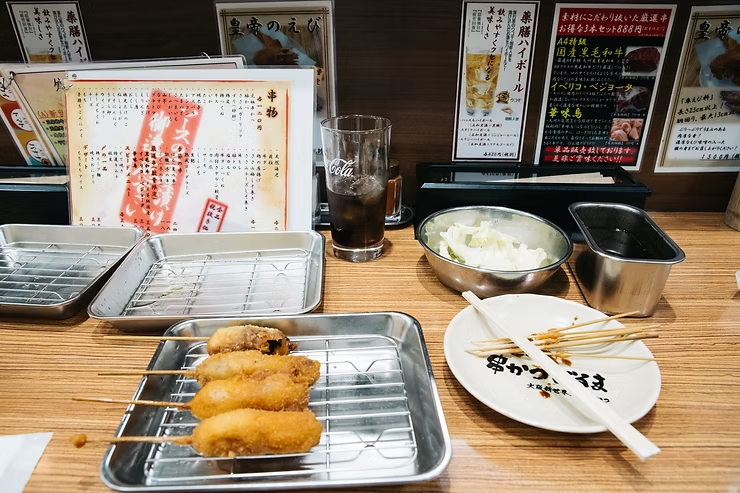
Hungry? Go straight to Daruma Shinsekai Main Branch, the birthplace of kushikatsu. Need a break? Sennariya Coffee awaits with kissaten-era velvet booths, stained glass, and that heavy, nostalgic pour that hipsters chase.
Let MK Be Your Guide to Osaka’s Most Surreal Crossroads
Where forgotten futures and eternal afternoons coexist, and where every alley, arcade, and skewer tells the story of a city too bold to imitate and too alive to fade. No other place in the city captures Osaka’s old soul quite like Shinsekai.
Let MK Guide Your Journey
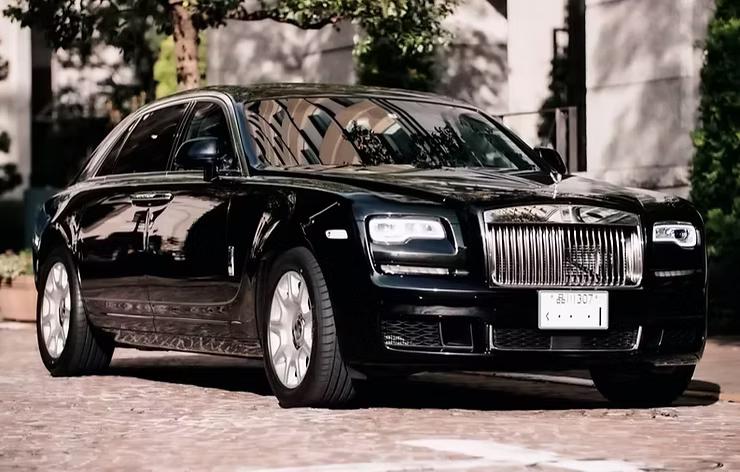
Let MK be your trusted guide through Japan. With local expertise, luxury vehicles, and English-speaking drivers, we create seamless, personalized journeys designed to make every experience effortless and unforgettable.
Plan your trip now with MK Guide.