Meiji-mura — The Village That Saved Time
While riding the Yamanote Line in Tokyo, architect Yoshiro Taniguchi was struck by a wave of sorrow at the sight of the demolished Rokumeikan, a grand two-story French Renaissance hall once hailed and hated as the symbol of Japan’s westernization. The Meiji Restoration had thrown open the gates of a once-sealed nation, and the architecture of the new era mirrored its cultural upheaval. Gone were the wooden silhouettes of Edo, when the shogun’s keep watched quietly over the capital. In their place rose brick, stone, and ornament borrowed from the West, structures both admired and condemned as signs of modern pride.
Taniguchi, overcome with grief over the loss of Rokumeikan, made a vow aboard that train: to become the savior of Japan’s Western-inspired masterworks, the churches, schools, and civic halls that defined an age of transformation. Together with his university classmate Motoo Tsuchikawa, future president of the Nagoya Railroad and the proverbial Robin to his Batman, he conceived a plan that would become a national act of preservation. The result was Meiji-mura, a sanctuary of Japan’s modern architectural awakening.
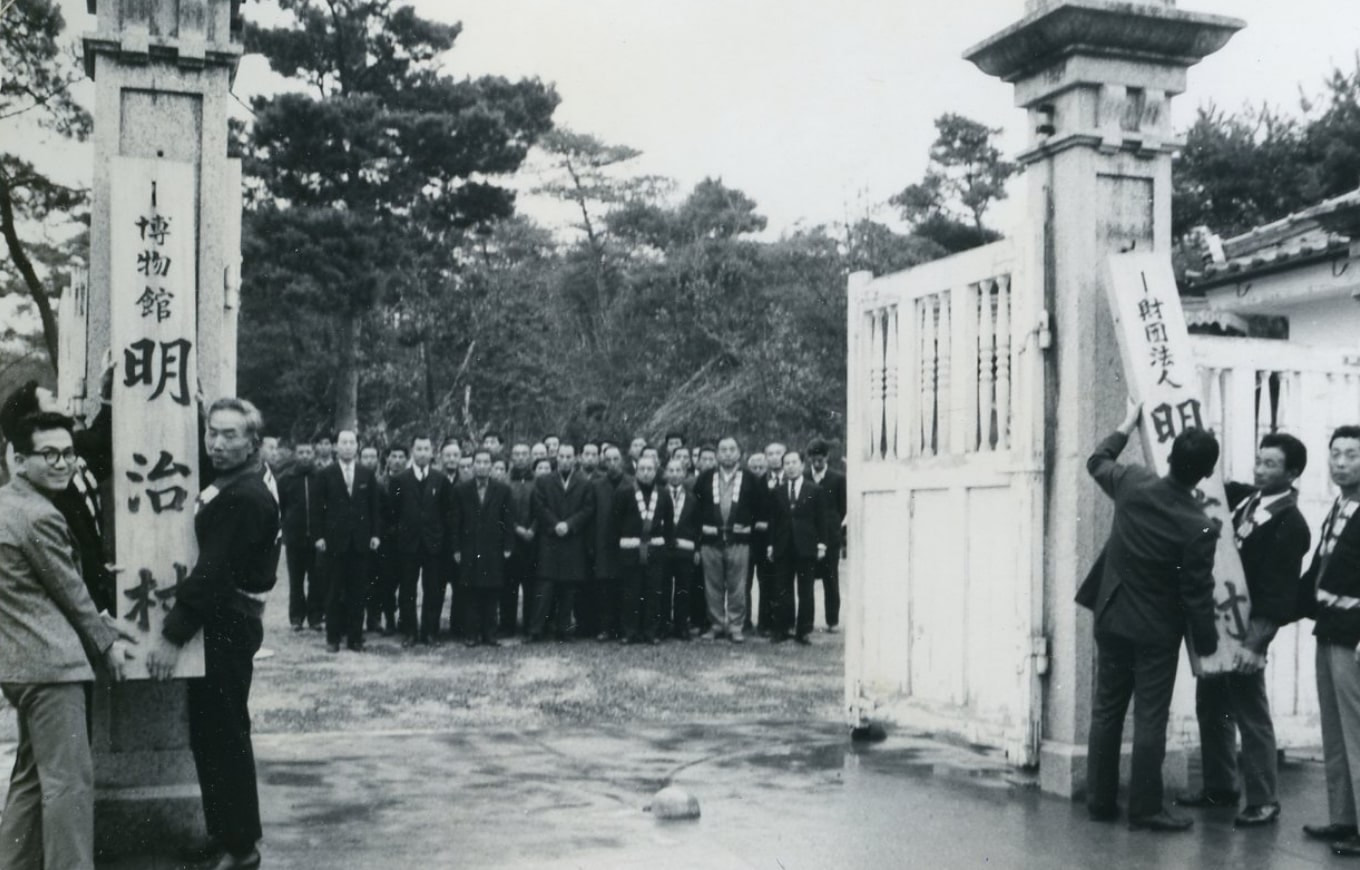
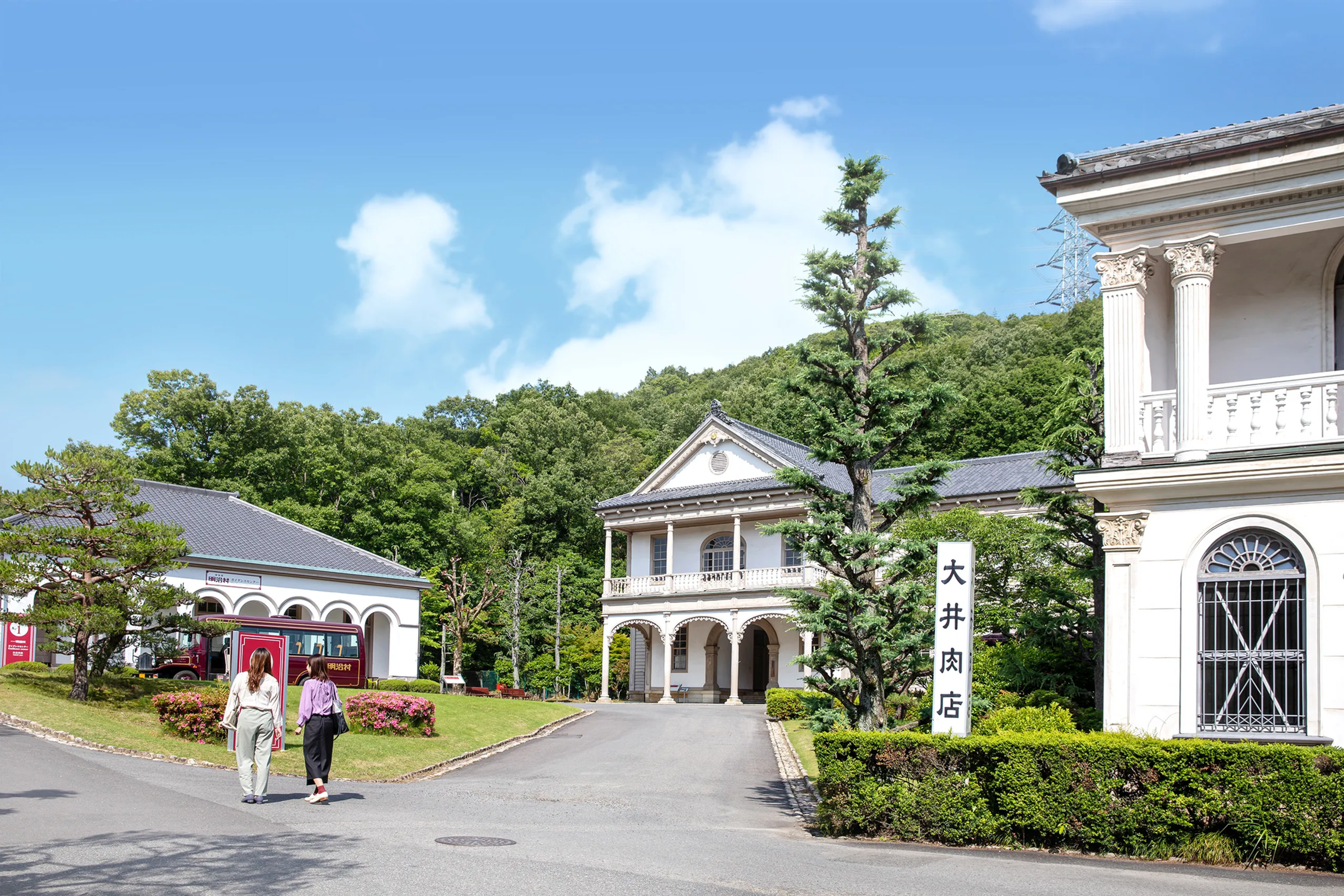
When the gates opened in 1965, Japan was deep in its economic miracle, tearing down its past to make way for the future. Amid the concrete boom, Taniguchi and Tsuchikawa rescued more than sixty buildings, each on the verge of disappearance from neglect, war, or progress itself, and gave them a new home on the gentle banks of Iruka Pond outside Nagoya. Here, framed by forested hills and the four turning seasons, each structure was carefully disassembled, transported, and reassembled in full. Eleven of them now stand as Important Cultural Properties, displayed with their original furnishings intact, their survival a quiet defiance of impermanence.
Among the most striking sights is the Imperial Hotel Lobby, designed by American visionary Frank Lloyd Wright. Completed in 1923 on the eve of the Great Kantō Earthquake, the hotel famously withstood the tremors only to be demolished decades later. Rebuilt here in 1976, Wright’s vision lives on in Oya stone and terracotta, a kaleidoscope of geometric patterns and warm light. Every detail, from rugs to lamps to furniture, was designed by Wright himself, manifesting his belief that architecture and interior should breathe as one organism.

Nearby stands St. Xavier’s Cathedral, first built in Kyoto in 1890 by Roman Catholic missionaries to honor Francis Xavier, the Jesuit who brought Christianity to Japan in the 16th century. Relocated here in 1973, the church’s rose-window stained glass filters sunlight into shards of color that fall across its cross-ribbed Gothic ceiling. At the altar stand seven saints, among them St. Stephen the Protomartyr, St. John the Baptist, and St. Joseph, guardian of the Theotokos, silent witnesses to the meeting of two civilizations.

The village itself is vast, more of a pilgrimage than a park. Winding roads pass through meadows, schools, churches, and consulates, each echoing a different vision of the Meiji dream. A steam locomotive and a village bus circle the grounds, a small mercy for the weary explorer. When hunger strikes, the scent of beef croquettes and breaded cutlets drifts from the cafés, a taste of nostalgia in an open-air museum that preserves not only buildings but also the fragile memory of Japan’s first modern century.
The MK Take
Meiji-mura isn’t nostalgia; it’s resurrection. The village stands as a testament to what Japan risked losing and to the visionaries who refused to forget. Walk its hills slowly, listen for echoes of brick and bell, and you’ll feel an entire century breathing again.
Image credit
- All photos courtesy of Meiji-mura Official(博物館明治村)
Let MK Guide Your Journey

Let MK be your trusted guide through Japan. With local expertise, luxury vehicles, and English-speaking drivers, we create seamless, personalized journeys designed to make every experience effortless and unforgettable.
Plan your trip now with MK Guide.