The Seat of Power in a City That Wasn't – Nijo Castle
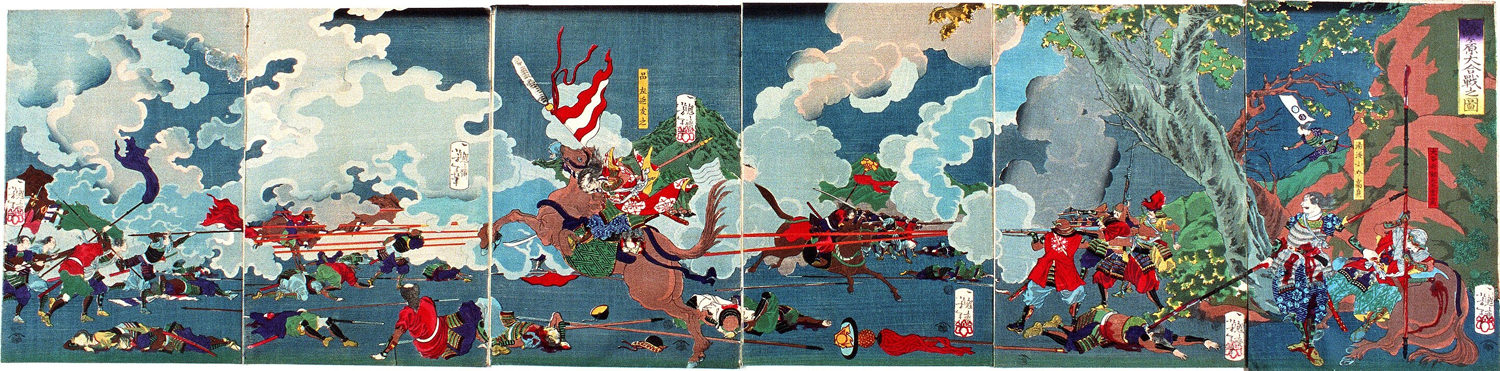
October 21, 1600. After six hours of fierce fighting at Sekigahara, 30,000 samurai lay dead. Of 150,000 troops, the Western Army suffered a decisive defeat. Tokugawa Ieyasu, the shrewd and calculating leader of the Eastern forces, emerged as the victor. With blood still drying on steel, Japan’s final shogunate was established. What followed was not chaos but the opposite: 260 years of relative peace under Tokugawa rule, a military government that overshadowed even the emperor in authority.
To cement this victory and remind everyone of his dominance, Ieyasu ordered the construction of Nijo Castle in Kyoto, the seat of the Imperial Court. It was a statement, a power move built from stone, cedar, and intimidation. Every feudal lord who pledged allegiance to the Tokugawa contributed materials and labor. But it wouldn’t be finished during his lifetime. The castle took 23 years to complete and was officially inaugurated under the rule of his grandson, the third shogun, Tokugawa Iemitsu. Still, the shadow of Ieyasu lingered. His name, legacy, and cremated bones remained a constant presence.
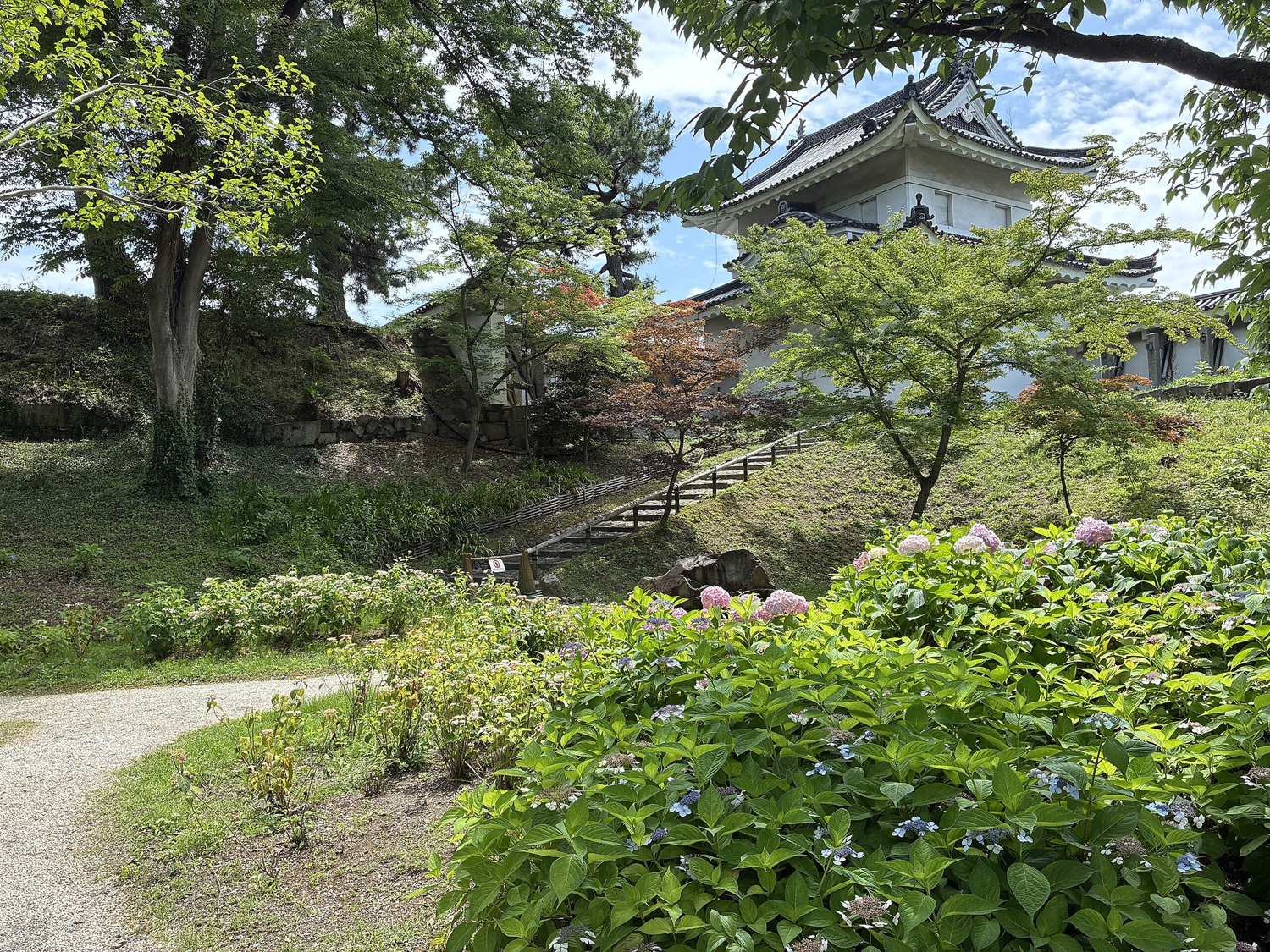
While Edo (modern-day Tokyo) was the political capital of the Tokugawa regime, Nijo Castle served as the shogun’s official residence when visiting Kyoto. Make no mistake, it was meant to outshine the neighboring Imperial Palace, just a stone’s throw away. With its sweeping walls, gold accents, and advanced architectural features, it conveyed a truth louder than any proclamation: the shogun, not the emperor, was the absolute ruler of Japan.
The shogun rarely visited Kyoto in person. Instead, Nijo Castle served as a military stronghold, housing a permanent garrison of loyal retainers. In 1614, Tokugawa Ieyasu launched his campaign against the Toyotomi clan from here, beginning what would become the fierce Siege of Osaka. When he returned victorious, the last remnants of Toyotomi resistance had been crushed. With Osaka in ruins, the Tokugawa era was firmly established.
Fast forward to 1867. The 15th and final Tokugawa shogun, Yoshinobu, stepped down and returned power to the Imperial Court. The Meiji Restoration had officially begun. After more than two and a half centuries, roughly the same length as the United States’ time as an independent nation, the shogunate was gone. Almost immediately, the Imperial government removed the Tokugawa hollyhock crest from Nijo Castle and replaced it with the emperor’s chrysanthemum seal. The era of the samurai was over.
In 1939, the castle was officially donated to the city of Kyoto. A year later, it opened to the public, not as a seat of power but as a symbol of it. Today, it stands as a living reminder of Japan’s feudal past, the rise and fall of a military dynasty, and the quiet yet powerful shift that restored imperial rule.
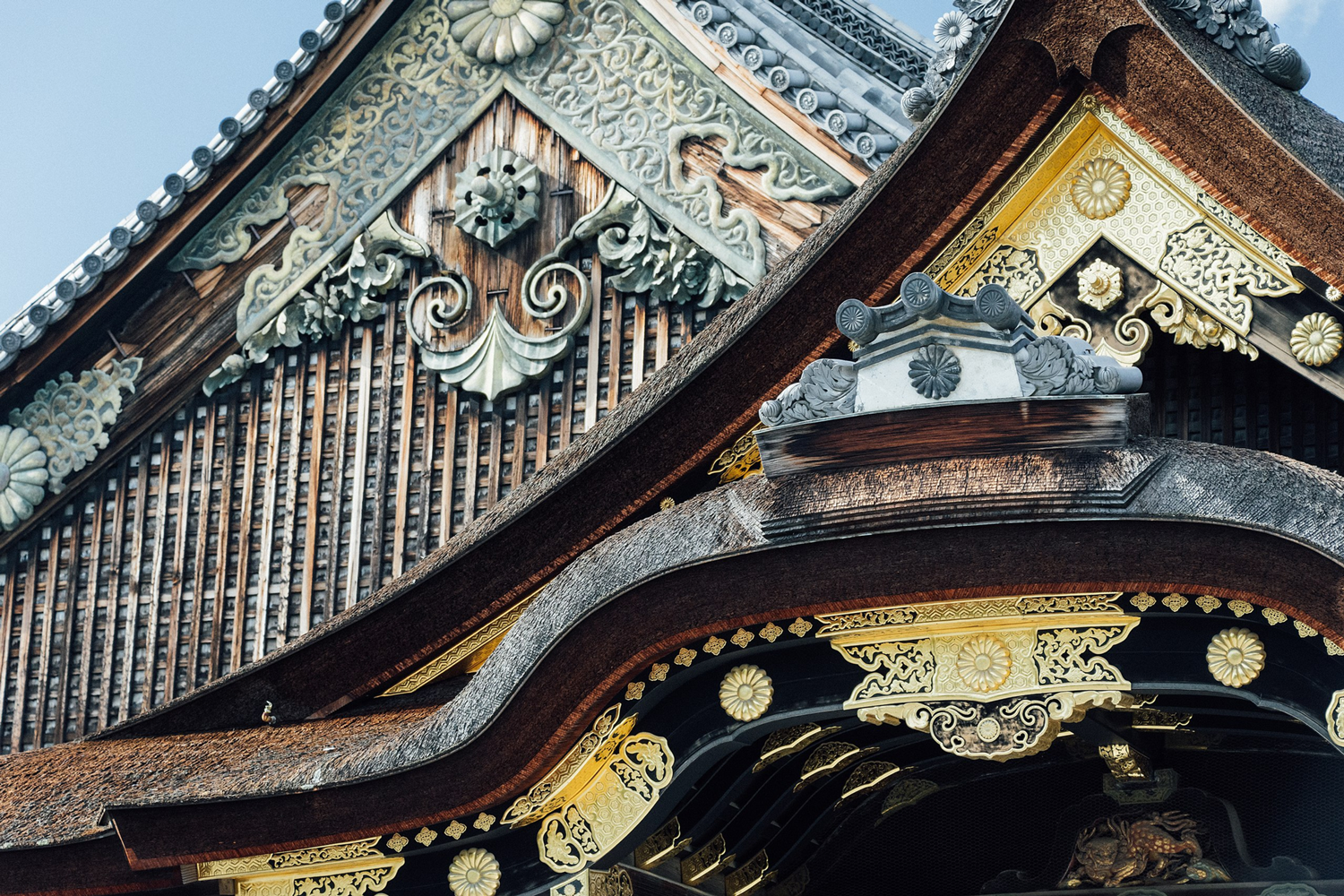
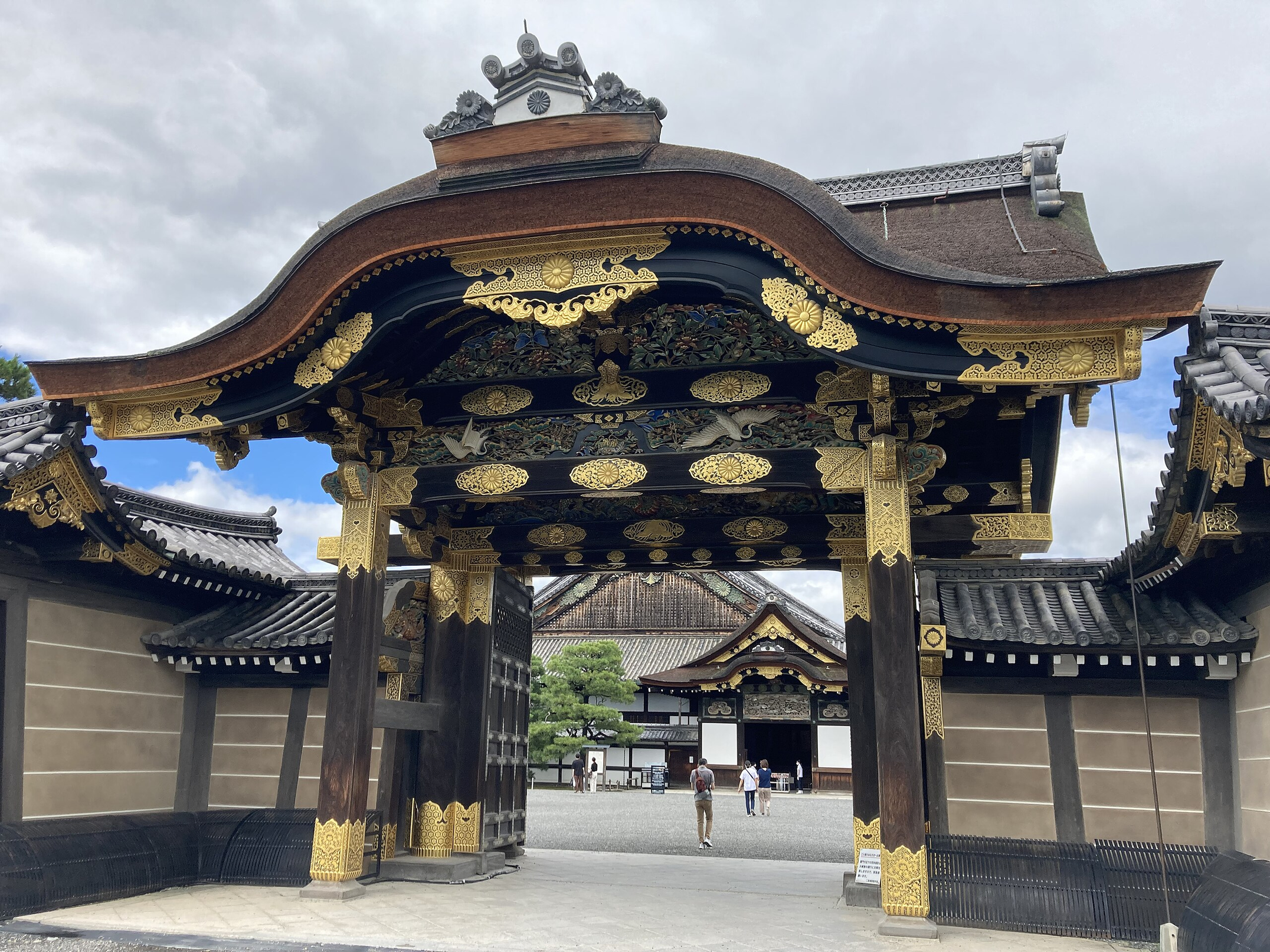
Your journey into this history begins at the Karamon Gate, an Important Cultural Property adorned with gilded woodwork and figures of phoenixes, tigers, cranes, and dragons. These creatures, symbols of longevity, strength, and divine protection, are carved with such intricate detail that they humble the modern mind. No digital rendering or CAD tool can match the raw precision of human hands working under imperial command.
Now a UNESCO World Heritage Site, Nijo Castle tells many stories, each layer carrying power, threat, and legacy. Walk its halls and listen to the chirp of nightingale floors, a defensive sound meant to alert of intruders. Stand before the Audience Hall and imagine daimyo lining the walls, prostrating themselves before a ruler who had no throne but wielded real power.
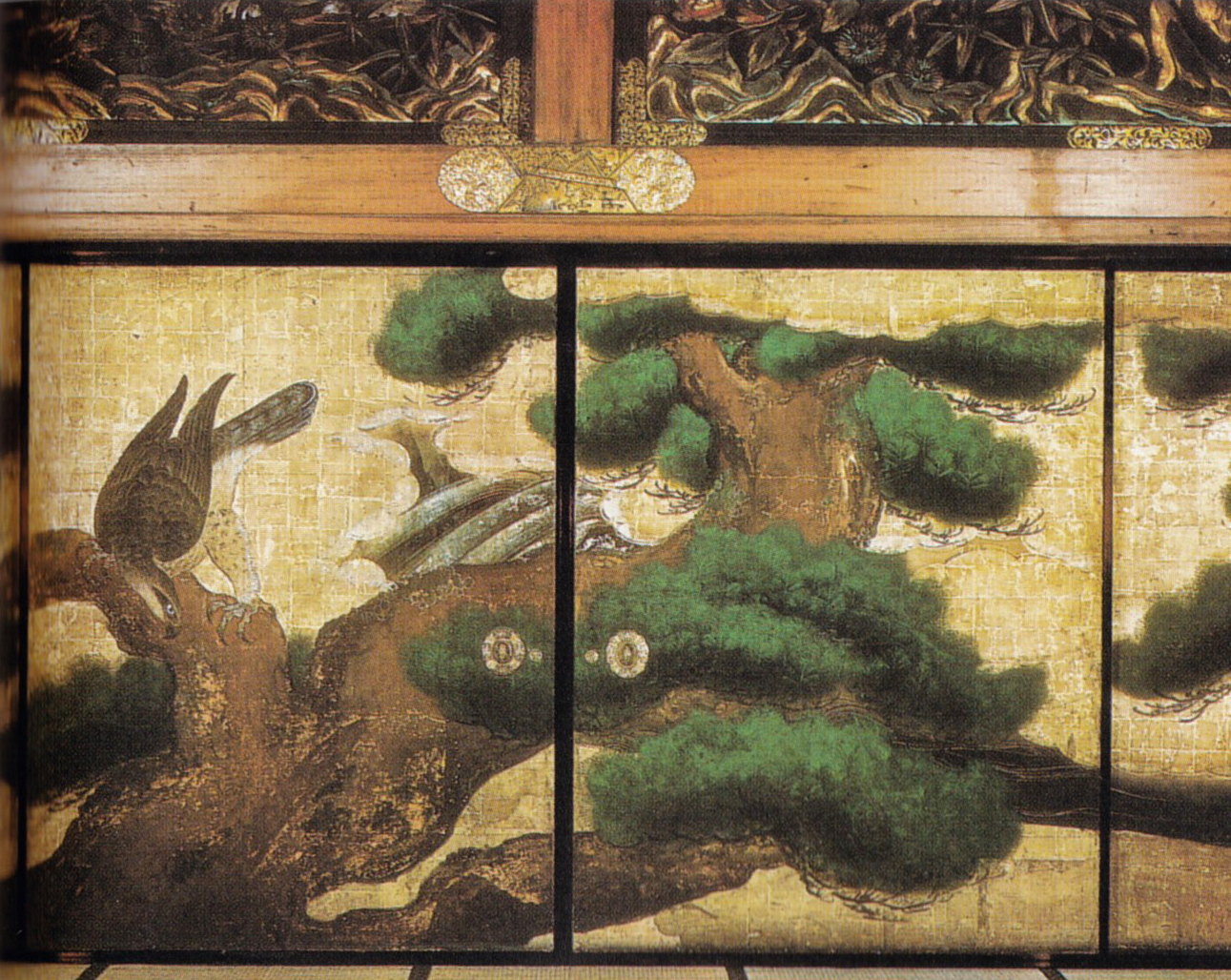
Stillness endures, but history continues to speak if you listen.
Walk Through History with MK’s Kyoto Private Tour
Explore the legacy of samurai rule and imperial power at Nijo Castle and beyond. Join MK’s driver-guided Kyoto tour for easy access to top cultural landmarks, personalized insights, and curated comfort. Book your unforgettable Kyoto experience today.
Image credit
- Beni Arnold, CC BY 2.0, via Wikimedia Commons
- Lin Xiangru, CC BY-SA 4.0, via Wikimedia Commons
- 京都東, CC BY-SA 4.0, via Wikimedia Commons
- Ismoon (talk) 18:19, 20 May 2019 (UTC), CC BY-SA 4.0, via Wikimedia Commons
Let MK Guide Your Journey
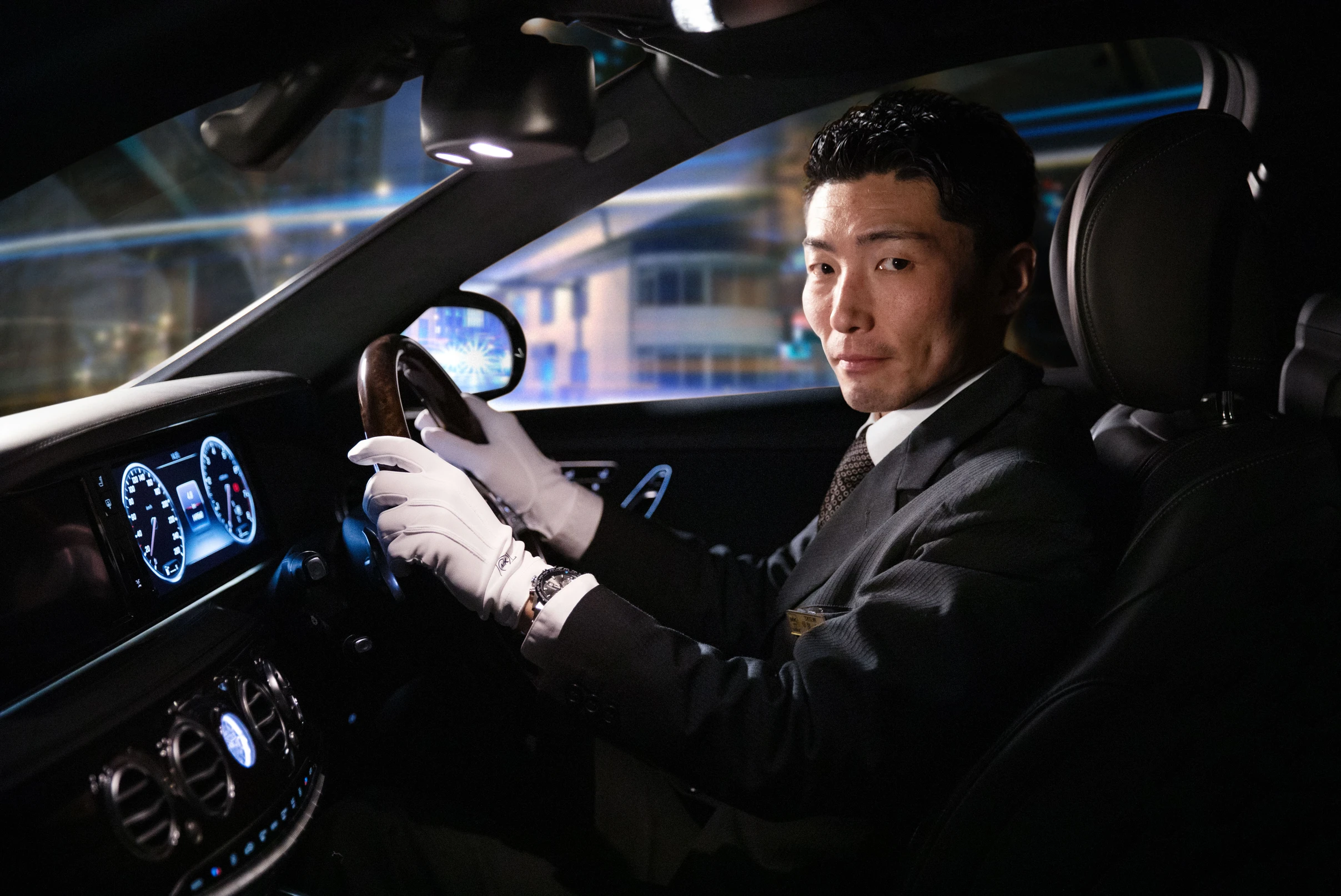
Let MK be your trusted guide through Japan. With local expertise, luxury vehicles, and English-speaking drivers, we create seamless, personalized journeys designed to make every experience effortless and unforgettable.
Plan your trip now with MK Guide.